
Complete Guide to Cap Moulds: Types, Applications & Manufacturing Process
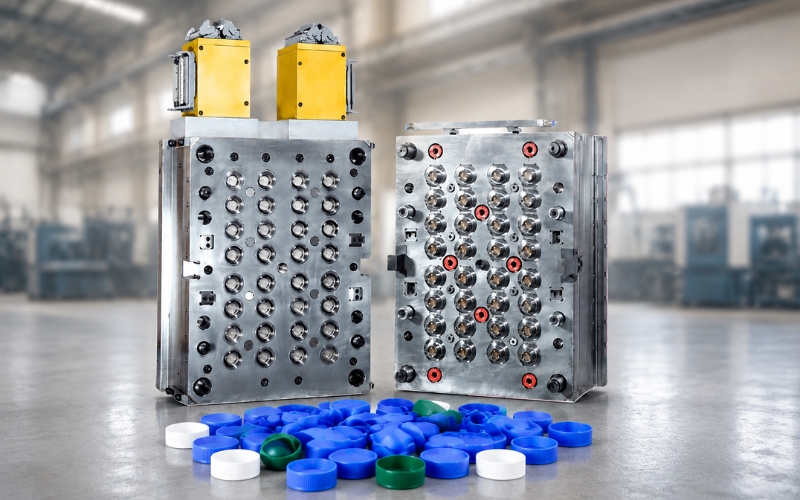
Cap moulds are one of the most important components in the plastic packaging industry, enabling the mass production of high-quality plastic caps and closures for bottles, containers, jars, and various packaging products. From beverage bottles and pharmaceutical containers to cosmetic and household packaging, precision-engineered cap moulds ensure consistent quality, durability, and high production efficiency.
Modern cap moulds are designed using advanced CAD/CAM technology, precision machining, and high-grade steel to achieve superior dimensional accuracy and long service life. Manufacturers today focus on producing high-performance moulds that reduce cycle time, improve productivity, and deliver defect-free plastic caps.
This guide explores the different types of cap moulds, their applications, manufacturing process, benefits, and key factors to consider when selecting the right cap mould for your production requirements.
What is a Cap Mould?
A cap mould is a precision-engineered injection mould used to manufacture plastic bottle caps, closures, lids, and packaging components through the injection moulding process. Molten plastic is injected into the mould cavity under high pressure, where it cools and solidifies into the desired cap shape.
Cap moulds are manufactured with high precision to ensure:
- Accurate thread formation
- Leak-proof sealing
- Uniform dimensions
- High production efficiency
- Long operational life
They are widely used for manufacturing caps for water bottles, beverage bottles, edible oil containers, pharmaceutical packaging, cosmetic products, chemical containers, and household products.
Why Are Cap Moulds Important?
Cap moulds play a crucial role in modern plastic packaging manufacturing.
Benefits of Cap Moulds
- Ensure consistent product quality
- Deliver high-speed production
- Reduce production costs
- Produce leak-proof bottle caps
- Improve dimensional accuracy
- Support mass production
- Minimize material wastage
- Increase production efficiency
- Offer longer mould life
- Maintain international quality standards
Types of Cap Moulds
Different industries require different types of plastic closures. Some of the most commonly used cap moulds include:
- Bottle Cap Mould
- Flip Top Cap Mould
- CTC Cap Mould
- Disc Top Cap Mould
- Sports Cap Mould
- Beverage Cap Mould
- Pharmaceutical Cap Mould
- Cosmetic Cap Mould
- Child Resistant Cap Mould
- Oil Bottle Cap Mould
- Inner Cap Mould
- Closure Mould
- PET Bottle Cap Mould
- Multi-Cavity Cap Mould
Each mould is designed according to the product’s application, dimensions, thread design, and production capacity.
Manufacturing Process of Cap Moulds
- Product Design: The cap design is developed using CAD software to ensure proper dimensions, thread accuracy, and functionality.
- Mould Design: Engineers create the complete mould structure, including cavities, cooling channels, ejector systems, and runner design.
- Material Selection: Premium-grade tool steels such as P20, H13, S136, and stainless steel are selected based on production requirements.
- CNC Machining: Advanced CNC machines manufacture mould components with micron-level precision.
- EDM Machining: Electrical Discharge Machining (EDM) creates intricate features and complex geometries.
- Heat Treatment: Heat treatment improves hardness, wear resistance, and mould lifespan.
- Polishing: Mirror polishing enhances surface finish and ensures easy product release.
- Assembly: All mould components are assembled with precision alignment.
- Trial Testing: The mould undergoes trial production to verify dimensions, cooling efficiency, and product quality before delivery.
Materials Used in Cap Mould Manufacturing
The performance of a cap mould depends largely on the material used. Common materials include:
- P20 Steel
- H13 Steel
- S136 Stainless Steel
- NAK80 Steel
- Tool Steel Alloys
- Hardened Stainless Steel
These materials offer excellent corrosion resistance, durability, hardness, and long production life.
Applications of Cap Moulds
Cap moulds are widely used across various industries.
- Beverage Industry: Manufacturing caps for mineral water bottles, soft drinks, juices, and energy drinks.
- Pharmaceutical Industry: Producing tamper-proof medicine bottle caps and closures.
- Cosmetic Industry: Manufacturing caps for lotions, shampoos, creams, perfumes, and skincare products.
- Household Products: Caps for detergents, cleaners, disinfectants, and liquid soaps.
- Chemical Industry: Leak-proof closures for chemical containers and industrial liquids.
- Food Industry: Caps for edible oils, sauces, syrups, and packaged food products.
- Dairy Industry: Closures for milk bottles, yoghurt containers, and dairy packaging.
Key Features of High-Quality Cap Moulds
A premium cap mould offers:
- High precision engineering
- Multi-cavity production
- Excellent cooling system
- Low maintenance
- High durability
- Corrosion resistance
- Easy mould maintenance
- Faster cycle time
- Superior surface finish
- Consistent product quality
Benefits of Using Precision Cap Moulds
Choosing a high-quality cap mould provides several operational advantages.
- Higher production efficiency
- Lower manufacturing costs
- Improved dimensional accuracy
- Reduced cycle time
- Better sealing performance
- Minimal rejection rate
- Longer mould life
- Enhanced productivity
- Stable mass production
- Better return on investment
How to Choose the Right Cap Mould
Before purchasing a cap mould, consider the following factors:
- Production volume
- Number of cavities
- Cap design
- Plastic material compatibility
- Cooling system efficiency
- Steel quality
- Mould lifespan
- Ease of maintenance
- Technical support
- Manufacturer experience
Selecting the right mould ensures smooth production and long-term operational efficiency.
Why Choose Ananta Moulds India?
Ananta Moulds India specialises in designing and manufacturing precision plastic cap moulds for a wide range of industrial applications. With advanced manufacturing technology, experienced engineers, and stringent quality control, the company delivers mould solutions that meet international quality standards.
Our Advantages
- Precision-engineered moulds
- Advanced CNC and EDM machining
- High-quality imported steel
- Customized mould solutions
- Multi-cavity mould expertise
- Faster production cycles
- Competitive pricing
- Reliable after-sales support
- Timely delivery
- Industry-focused manufacturing solutions
Conclusion
Cap moulds are the backbone of modern plastic packaging manufacturing, delivering high-speed production, consistent quality, and exceptional precision across various industries. Investing in a well-designed, durable cap mould improves productivity, reduces operational costs, and ensures reliable performance for years.
Whether you require bottle cap moulds, flip top cap moulds, beverage cap moulds, or customised closure mould solutions, partnering with an experienced Cap Mould Manufacturer like Ananta Moulds India ensures precision engineering, innovative design, and long-lasting performance tailored to your production needs.
FAQs
Q1. What is a cap mould?
Answer: A cap mould is an injection mould used to manufacture plastic bottle caps, closures, and lids with high precision and consistency.
Q2. Which industries use cap moulds?
Answer: Cap moulds are widely used in beverage, pharmaceutical, cosmetic, food, chemical, dairy, and household product manufacturing industries.
Q3. What materials are used to manufacture cap moulds?
Answer: Common materials include P20 steel, H13 steel, S136 stainless steel, NAK80 steel, and hardened tool steel.
Q4. How long does a cap mould last?
Answer: A high-quality cap mould can produce millions of cycles with proper maintenance and regular servicing.
Q5. What are multi-cavity cap moulds?
Answer: Multi-cavity moulds produce multiple caps in a single injection cycle, increasing productivity and reducing manufacturing costs.
Q6. Can cap moulds be customised?
Answer: Yes. Cap moulds can be customised based on cap size, thread type, design, cavity count, plastic material, and production requirements.