
Injection Mould Manufacturing: A Guide for Plastic Packaging Industries
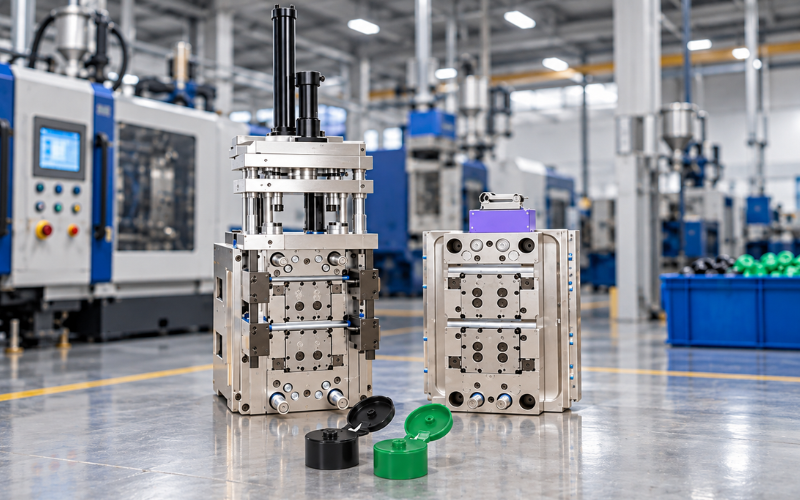
The plastic packaging industry depends on precision, consistency, speed, and reliable production. From bottle caps and flip-top closures to containers and specialized packaging components, manufacturers require high-quality moulds to achieve accurate dimensions and consistent product quality. This is where injection mould manufacturing plays an important role.
Injection moulds are specially engineered tools used to produce plastic components through the injection moulding process. For packaging manufacturers, selecting the right injection mould manufacturer can directly influence production efficiency, component quality, cycle time, mould life, and overall manufacturing costs.
Ananta Moulds provides moulding solutions for the caps and closures industry, including high-speed and multi-cavity mould solutions designed for demanding production environments.
What Is Injection Mould Manufacturing?
Injection mould manufacturing is the process of designing and producing precision moulds used to manufacture plastic components. During injection moulding, molten plastic material is injected into a mould cavity under controlled pressure. After cooling and solidification, the finished component is ejected from the mould.
The quality of the mould has a significant impact on the final product. A well-designed mould helps maintain dimensional accuracy, improve repeatability, support faster production cycles, and reduce defects.
For the plastic packaging industry, moulds are commonly developed for products such as:
- Plastic bottle caps
- Flip-top caps
- Beverage caps
- Closures
- Spouts
- Plugs
- Cosmetic packaging components
- Pharmaceutical packaging components
- FMCG packaging components
- Customized plastic packaging parts
Ananta Moulds offers various cap and closure mould solutions, including flip-top and beverage cap moulds.
Why Injection Moulds Are Important for Plastic Packaging
Packaging manufacturers often produce millions of components over extended production periods. Therefore, the mould must deliver consistent performance throughout repeated production cycles.
A professionally engineered plastic mould can help manufacturers achieve:
1. Consistent Product Quality
Packaging components need to maintain consistent dimensions, shape, weight, and finish. Precision injection mould manufacturing helps ensure that every production cycle delivers components within the required specifications.
This is particularly important for caps and closures, where dimensional accuracy can affect sealing, opening, closing, and compatibility with the packaging container.
2. High-Speed Production
Modern packaging operations require high production volumes. High-speed moulding solutions can support faster cycles while maintaining product consistency.
Ananta Moulds specializes in fully automatic high-speed moulds designed for the caps and closures industry and capable of integration with robots and post-moulding operations.
3. Multi-Cavity Production
A multi-cavity mould can produce multiple components during a single injection cycle. This makes multi-cavity technology particularly useful for high-volume plastic packaging applications.
Depending on the product design and production requirements, manufacturers can select suitable cavity configurations to increase output and improve production efficiency.
4. Reduced Material Waste
Mould design influences material flow, gating, cooling, and part formation. Proper engineering can help manufacturers control material usage and minimize defects and rejected components.
For packaging companies operating at large production volumes, even small improvements in material efficiency can have a significant impact on overall manufacturing costs.
Types of Plastic Packaging Moulds
Different packaging applications require different mould designs. A professional injection mould manufacturer should be able to understand the product requirements and develop a suitable tooling solution.
Flip Top Cap Moulds
Flip-top caps are widely used for personal care, household, food, and other packaged products. These closures need accurate dimensions and reliable opening and closing mechanisms.
High-precision flip top cap moulds can help manufacturers achieve consistent production while supporting high-volume requirements.
Plastic Bottle Cap Moulds
Bottle caps are essential components of beverage, FMCG, pharmaceutical, cosmetic, and other packaging applications. A properly designed plastic bottle cap mould helps maintain dimensional consistency and sealing performance.
Ananta Moulds develops mould solutions for different cap sizes and designs, including beverage and flip-top applications.
Beverage Cap Moulds
Beverage packaging requires closures that provide reliable sealing and consistent fitment. Beverage cap moulds are therefore engineered with close attention to dimensions, cavity balance, cooling, and production speed.
Ananta Moulds offers beverage cap mould solutions, including 32-cavity and 48-cavity configurations listed on its product portfolio.
Customized Cap Moulds
Packaging requirements differ from one product to another. Customized mould solutions allow manufacturers to develop caps according to specific container dimensions, product requirements, functionality, and design specifications.
Customization is especially useful for brands that require distinctive packaging designs or specialized closure features.
Key Factors to Consider When Selecting an Injection Mould Manufacturer
Choosing an experienced injection mould manufacturer is an important decision for packaging companies. Before finalizing a supplier, manufacturers should consider several factors.
Mould Design and Engineering
The manufacturer should understand product geometry, material properties, production volume, cooling requirements, ejection systems, and cycle-time objectives.
Number of Cavities
The required number of cavities depends on production volume, machine capacity, product design, and investment requirements. High-volume packaging applications may require multi-cavity tooling to achieve the desired output.
Material and Component Quality
The mould must be manufactured using suitable materials and precision machining processes to withstand repeated production cycles.
Automation Compatibility
Modern packaging production increasingly uses automation, robotics, and post-moulding systems. Therefore, mould design should consider integration with the overall production line.
Ananta Moulds states that its high-speed moulds are designed to be interfaced with robots and other post-moulding operations.
Maintenance and Mould Life
A packaging mould may operate through a very large number of cycles. Proper construction, maintenance accessibility, cooling design, and component selection can contribute to reliable long-term performance.
Injection Mould Manufacturing Process
A typical injection mould manufacturing workflow involves several important stages.
Step 1: Product and Requirement Analysis
The mould manufacturer studies the component design, material, dimensions, production quantity, machine specifications, and application requirements.
Step 2: Mould Design
CAD-based design is used to develop the mould structure, cavity arrangement, runner system, cooling channels, ejection mechanism, and other critical elements.
Step 3: Precision Machining
Mould components are manufactured using precision machining equipment. Accurate machining is essential for achieving the required dimensional tolerances.
Step 4: Mould Assembly
Individual components are assembled and inspected to ensure that the mould operates correctly.
Step 5: Testing and Trials
The mould is tested under suitable production conditions. Trial runs help identify potential issues related to filling, cooling, ejection, dimensions, or surface finish.
Step 6: Production Integration
After successful validation, the mould can be integrated with the customer’s injection moulding machine and associated automation or post-moulding systems.
Benefits of Working With a Specialized Injection Mould Manufacturer
Working with a specialized injection mould manufacturer can provide packaging companies with more than just a mould. The right manufacturing partner can contribute to tooling design, customization, production optimization, and integration.
Key benefits include:
- Precision-engineered moulds
- Consistent production quality
- High-speed production capabilities
- Multi-cavity mould solutions
- Customized mould designs
- Support for different packaging applications
- Compatibility with automation systems
- Improved production efficiency
- Reduced defects and material wastage
- Long-term mould performance
Ananta Moulds provides mould solutions for industries including FMCG, cosmetics and personal care, medical and pharmaceutical, food and beverage, household care, oil and lubricants, and agrochemical applications.
Why Ananta Moulds for Injection Mould Manufacturing?
Ananta Moulds is based in Vasai near Mumbai and was established in 2019. The company focuses on mould solutions for the caps and closures industry and provides high-speed moulds designed for integration with automation and post-moulding operations.
Its product portfolio includes different cap and closure mould solutions, such as flip-top cap moulds, beverage cap moulds, spout-bottom moulds, and other customized packaging moulds.
For packaging manufacturers looking for precision tooling, selecting an experienced injection mould manufacturer can help create a reliable foundation for consistent, high-volume production.
Conclusion
Injection mould manufacturing is a critical part of modern plastic packaging production. From plastic bottle caps and flip-top closures to beverage packaging and customized components, the quality of the mould directly influences production consistency, efficiency, and product performance.
By considering factors such as mould design, cavity configuration, automation compatibility, precision machining, cooling, maintenance, and production requirements, packaging manufacturers can select a mould solution that aligns with their manufacturing goals.
For companies requiring precision plastic moulds, cap moulds, closure moulds, and high-speed injection mould solutions, Ananta Moulds offers specialized tooling solutions for diverse packaging applications.
Looking for a reliable injection mould manufacturer for your plastic packaging requirements? Connect with Ananta Moulds to discuss your mould design and production requirements.
FAQs
Injection mould manufacturing is the process of designing and producing precision moulds used to manufacture plastic components through injection moulding. These moulds help produce consistent components such as caps, closures and other plastic packaging products.
Injection moulds help packaging manufacturers achieve consistent dimensions, repeatable production, high output and reliable product quality. Properly designed moulds can also support automation and high-speed production.
Injection moulds can be used to manufacture products such as plastic bottle caps, flip-top caps, beverage caps, closures, spouts and other customized plastic packaging components.
A multi-cavity mould contains multiple cavities and can produce several plastic components during one injection cycle. It is commonly used for high-volume manufacturing where increased production output is required.
Consider the manufacturer’s mould design capabilities, precision machining, cavity configuration, material selection, production requirements, automation compatibility, customization capabilities and after-sales support.